Racer Profile: Don Benson
November 25, 2026 - 3:33pm
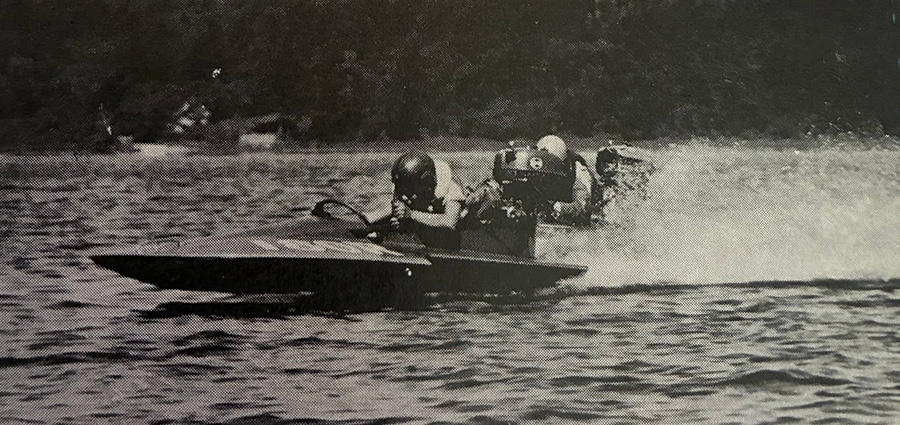
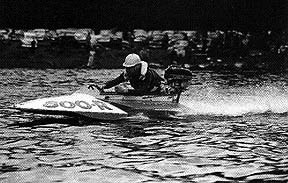
This 1955 photo by Bob Carver shows National Champion Don Benson leading out of a turn in his A Stock Hydro with 7.5 HP Mercury engine.
Racer Profile: Don Benson
By Craig Fjarlie
Don Benson, known as Donnie Benson to all who raced with him, was born into a racing family in 1939, in Seattle. His father, Al, and his mother, Dorothy, were racing outboards at the time he was born. “We lived in Madison Park, down by the ferry landing,” Donnie explains. “We were two or three blocks up from the lake and it was a pretty nice place. You could watch the ferry or ride it to Kirkland, and Dad had a little shop right next to the ferry landing, down on the water. In fact, in the pictures of the Slough race in the early days, that was Dad’s shop, right there.” The ferry took people and cars across Lake Washington before the floating bridge was built.
When asked how his father became interested in boat racing, Donnie offers only sketchy details. “He had been racing since the early ’30s. He had a car radio business in downtown Seattle. The new cars would come into town without radios, except for Cadillacs and LaSalles, and the other real expensive cars. He had a shop that installed radios in all the new cars. It was actually pretty lucrative. He was probably one of the first Motorola dealers, because that’s the car radio they were using.”
Al Benson became acquainted with boat racers who often hung around his shop. “Bill Rankin, Pat Cunnins, Jimmy Harland, all those old guys. I don’t know if somebody loaned him a boat or what,” Donnie says. “I wasn’t there.”
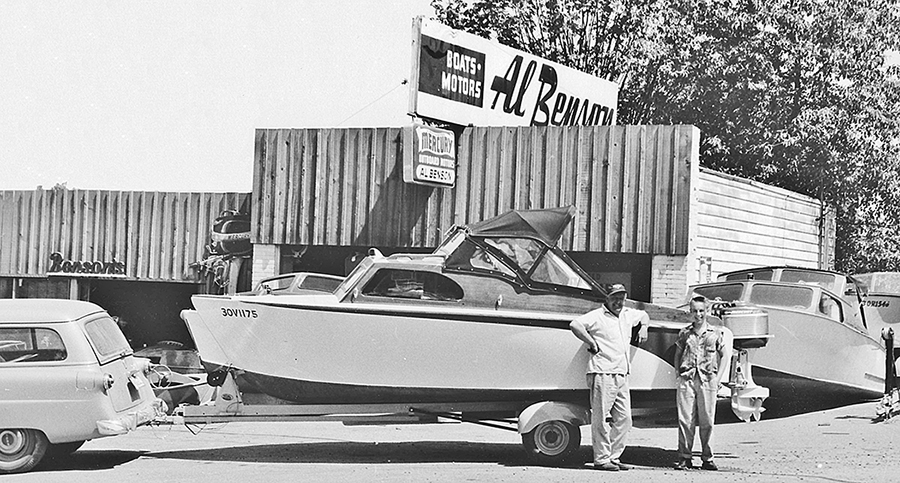
Anyone racing or attending the Sammamish Slough saw Al Benson’s boat shop right on the water. Al later ran a marina near Lake Washington. Benson family photo
When Donnie was in early elementary school, and his brother, Jim, had been born, the family moved north. Al Benson operated a marina, and their house included a dock on Lake Washington. It was a given that Donnie and Jim Benson were going to race boats. “We didn’t have a choice,” Donnie confirms. “We wanted to, yes, but it was there, no doubt.”
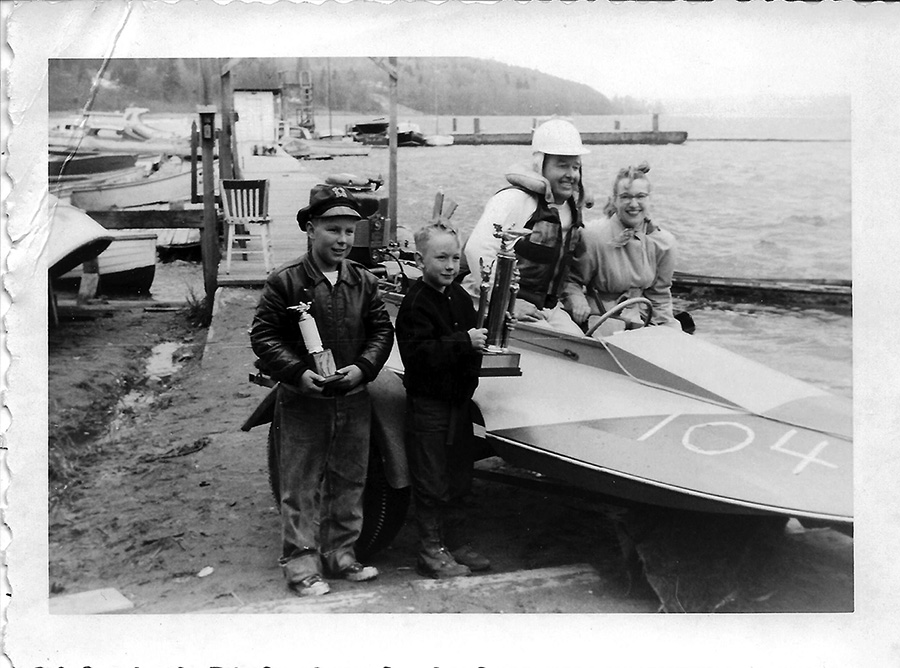
The Benson family at the 1953 Sammamish Slough race (L-R) Donnie, brother Jim, Al, and Dorothy. Donnie went on to win the Slough race several times. He and Jim are holding Al’s trophies—a proud day for all.
Al Benson encouraged a number of youngsters in the neighborhood to start racing J Runabout outboards. “It was fun, with Billy Schumacher, Chuck Lyford, and all the kids. Dad set up the little five-horse Mercurys. It was a neat way to learn. Start at the bottom, you learn all the bad things, you learn some good things. They weren’t really fast enough to get into too much trouble. When I broke the record, it was 22-something.”
The new young drivers were able to use Benson’s dock to go testing at almost any time. Al Benson was the equipment chairman for Seattle Outboard Association, so he had access to the club’s starting clock. He would set it up at the end of the dock. “We wore it out,” Donnie admits with a laugh. “We also had buoys. Seaplanes from Sand Point would come and land in the middle of the lake. They used these great big rubber buoys with lights on them. Well, once in awhile he would ‘borrow’ a few of them, bring them to the house, and set up a one-buoy turn. We had a course in front of the house. Schumacher, Lyford, and a lot of guys down there who were racing used it. Schumachers lived a half-dozen houses north of us. They had a big family—all girls, except for Billy. They were water skiers. They had a jump out front of the house. That’s where I learned how to ski.”
Donnie talks about his early friendship with Chuck Lyford. “He and I were like brothers almost,” he says. “I stayed at his place, he stayed at my place. They lived in a colonial mansion, right next to Bill Boeing, Jr., on the hill overlooking Bill Boeing, Sr.’s house on Lake Washington. Right above it. I loved it there, but Chuck was always getting in trouble. He’d do silly things. I got in trouble too, because I was with him.” He tells a story about an incident when they went joyriding in outboards. “Chuck and I ran all the way into Lake Union, with an extra fuel can behind us in the hydros. We’d run around the Arboretum. You’re not supposed to run boats in the Arboretum—that’s for canoes. All these fishermen were in there and we apparently ran over somebody’s line. They were yelling at us and waving their fists. Seattle Outboard got a call because the boats all had numbers on them. It was Judge DeGrief from the Seattle Public Safety building at the courthouse. We ran over his line! Next time I went to court for a speeding ticket, there’s Judge DeGrief. Boy, he used to throw the book at me. I spent a whole summer in jail, on the weekends, just because of traffic violations. But Chuck and I got in a lot of trouble for that one.”
Donnie remembers his first race at Devil’s Lake in 1951, in J Runabout. “We took the neighbors and all their boats,” he says. “Won the race. The next day we ran the mile, which is now a kilo. I broke the record in the mile. That 22 miles an hour was famous. Took me forever to run the mile,” he laughs.
In a few years, Donnie moved up to A Stock, where he ran both Hydro and Runabout. The first time in A Stock Runabout he liked the speed. “It really felt good. The boat rode like it should. I think the first year I ran A, I broke the straightaway record at 46-something. The prior record was 41 or 42; I raised it quite a way.
Then Karelsen built me a new one. Ill Eagle was the name on it. It had a big graphic on the side of a turned-over eagle, with a crutch under one arm and, like it had a toothache, a bandage around its head. There’s bubbles coming out like too much alcohol, you know, hangover. Everybody thought that it was an illegal boat or illegal engine. It wasn’t spelled that way. That was a fast boat—really fast.”
In 1955, Donnie won the Nationals in A Stock Hydro, at Devil’s Lake. “It was a Swift hydro,” he remembers. “It belonged to John and Jimmy Nordstrom, of Nordstrom Shoe Company. Both of them were very tall guys; they didn’t fit well in a little hydro. Went to Devil’s Lake and I wasn’t really expecting to run that hydro. Nordstroms came up to me – I knew them – and they said, ‘How would you like to run our boat?’ I said, ‘Sounds good to me.’ I think I got second in the first heat, won the final. But I won the Nationals.”
Donnie liked driving Karelsen boats. “He started boat building in our shop, in the late ’40s. He was kind of like a Japanese camera maker. You know, they copied the art of the Argus C3 and they made a better camera. Yashika and all those camera companies came out. Eddie could copy anything. He took the best points on all the boats he could find, including Van Pelt, SidCraft, Swift, Jacobsen, Biesmeyer, so many boats from back East. He made copies. Ron Jones asked me, ‘How come you never drove any of my boats?’ I said, ‘Well, we started Ed Karelsen building boats in our shop. What’s that tell you?’ I was a little committed there, and I test drove all the boats, even the inboards. Most of ’em were good. A couple of them I didn’t like.”
Although Donnie began moving into inboard classes, he continued driving outboards in the Sammamish Slough races. He took first place in the A Stock Runabout class in 1954, first in A Stock Hydro in ’56, first in A Outboard Hydro in ’59, and first in A Stock Hydro in ’60.
Donnie’s first competitive ride in an inboard was a 48 class boat named Rocket, owned by Jack Colcock. The boat had features that were similar to outboards, so Donnie adjusted quickly. “I knew it well,” he says. “Hand throttle, kneeldown, except it had half a steering wheel, like a small airplane steering wheel. I didn’t like that ‘cause you didn’t dare take your hand off it. You had one of those throttles and here this part of the steering wheel is missing. They were jumpy little things—pretty fast. I ran it maybe once or twice. That was my first inboard ride.”
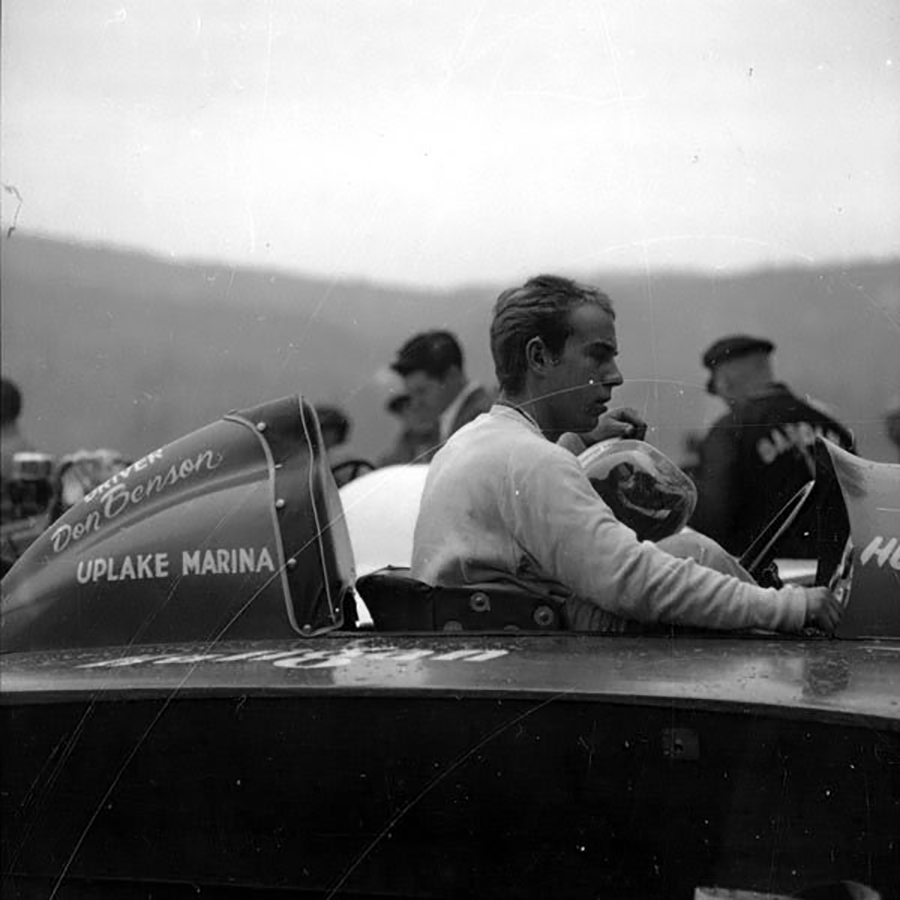
Moving on to Inboards, Donnie Benson in Bob Reisch’s 280, Hooligan, powered by a Buick Special 264 cubic inch V-8. Benson family photo
Before long, Bob Reisch asked Donnie to drive his 280, Hooligan. “He built it in Washington, D.C., and brought it out here. Reisch’s boat was a Hickling design, modified. Instead of having a narrow transom, it had a real wide transom. Made it a little ugly, but it also made it handle like an outboard. Had a Buick engine, where nobody else had Buick. That class started when Chevrolet came out in ’55, and that boat was built in ’54, so it didn’t have a Chevy, he had a Buick Special 264 cubic inch V-8. Vertical valve covers. Buicks didn’t have the valve covers laying on their side. They were vertical, so they were really restricted on valve size, but in that class it didn’t matter. Good boat—really good. Dad drove it, too.”
Donnie drove a number of inboard hydroplanes. “I drove for Muncey. I drove some of his inboards because Willard Rhodes wouldn’t let him drive, because he was running Miss Thriftway. I ran every class of inboard other than the flatbottoms. I had a Super Stock; it was an SK Runabout. I didn’t like it. That’s probably why I didn’t run flatbottoms.”
He talks about driving a 7-Litre named T-Bird. “A lot of people didn’t realize Bob Reisch built that boat. It belonged to a guy in Burlington who owned a whole pile of rest homes. Grant Burton was his name. He spent all the money, got the boat running, and gave the boat to us to run. He never came to the races. He gave us a new car, gave us the money, a couple of new engines. A Ford company, Burlington Ford, sponsored us. They gave us an engine every time we needed it. They weren’t the greatest engines, but they were enough to win.”
Donnie drove boats with round bows and pickleforks. “I didn’t notice any difference. It’s like conventional to cabover. I liked it better because I could see better. I hate looking around the engine.”
The 1966 Inboard Nationals were in Seattle on Lake Washington, in the same place where Unlimited races are held. Donnie drove a 280 called Lil’ Squirt, a Lauterbach hull owned by Bruce McDonald. The water was very rough. Donnie finished second in the first heat. “The second heat, I was determined to get the inside and be going flat out. I was, and I did. I ran off from everybody and ran right on the world record.” It was enough to give him the win. After the race, other drivers came up to him and asked, “How can you run hard in this water, and how can you run on the record?” Donnie told them, “We run in this water all the time. This is our water.” Their response was, “Boy, we ain’t coming out here again.”
When Donnie was starting to drive inboards, his father, Al, was driving Unlimiteds. He drove Miss Seattle, the former Slo-Mo-Shun V when it was freshly repaired from its famous back flip while qualifying for the 1955 APBA Gold Cup. He later drove Miss Pay ‘n Save, a new boat in 1958. “A lot of times, he’d go to Sand Point and test drive the boat,” Donnie recalls. “I got a chance to test some props and some engines. Fortunately, I never blew up an engine. They weren’t that good, even though we had the Slo-Mo crew—Wes Kiesling as crew chief, and Burns Smith. Wes was a cantankerous son of a gun. Actually, our 266 would go quite a bit faster than Miss Seattle. The speedometer would come around to 145 and they had fingernail polish right there. If that needle went under that fingernail polish, good chance you were blowing over.”
Donnie had a different feeling about Miss Pay ‘n Save. “It wanted to stuff,” he says. “It was a cool boat, beautiful boat. It was the first Unlimited to have the propeller out behind the transom, just a little bit. Gave it a lot of lift that we didn’t really anticipate. One of the first times Dad ran it at Stan Sayres pits, he stuffed it in a cruiser wake. Broke his back. Took four feet off the bow, too. It pitched him out, he came down on the small of his back, and that’s what broke his back. He kind of got back in the seat, fired it up and came back to the pits. He climbed out of it, got off the deck onto the dock and noticed one shoe was untied. He went to tie it, bent over and passed out. I was there; I saw that.” Donnie later had an opportunity to drive the boat. “I really didn’t want to,” he admits.
At the 1966 President’s Cup race in Washington, D.C., Unlimited hydroplane racing lost three drivers. Ron Musson was killed in the new cabover Miss Bardahl. Rex Manchester, who was married to Ole Bardahl’s daughter Evelyn, was killed in Notre Dame, and Don Wilson lost his life in Miss Budweiser. Ole Bardahl decided to have Ed Karelsen build a new Miss Bardahl for the 1967 season.
Donnie Benson was being considered as the driver for the new Bardahl boat. “I even talked to Evelyn Manchester, Bardahl’s daughter, about running the boat,” he recalls. “She said, ‘Eddie Karelsen suggested you drive it.’ I said, ‘Great, I look forward.’ She said, ‘Are you married?’ I said, ‘Well, yeah.’ ‘You got any kids?’ ‘Yeah, two daughters.’ She said, ‘I’m sorry, you’re not going to drive the boat.’ I said, ‘Why not?’ She said, ‘I’m not going to kill another father.’ There I was.” The job went to Billy Schumacher, who was single. “I said, ‘Well, there’s only one driver that’s as good or better than me; that’s Billy Schumacher. And Billy, he’s pretty shy.’” Schumacher had tested the cabover Bardahl when it was being prepared for the 1966 season. “He didn’t like it,” Donnie remembers. “He knew it was going to stuff. Billy was smart. He always kind of ran scared—when he got in a boat, he was shaking so bad. His 280 was one of those old Jones conventionals that rode like this,” he says, gesturing that the boat was down heavy on the water. “They never flew, so I could beat him all of the time.”
At about the same time, Chuck Lyford was setting records in a 7-Litre boat named Challenger. “It was a Colcock boat; Colcock had an engine for it,” Donnie explains. “I’m not sure if Colcock didn’t own it all the time Chuck drove it. It was a good boat. It was a little engine, 327 in it, fuel injected, and nothing in the country could beat it. Even a supercharged big Chrysler couldn’t beat it. When it was sold to Babcock, that’s when he went on the crew of the U-95, the turbine boat. He was crew chief. After that he got into the airplanes. I didn’t really see him much around then, because he was always gone.”
Looking back at his years in racing, Donnie says his favorite inboard class was 280. “It was fun because there were always a lot of boats,” he points out. “One year at Green Lake we eliminated five times. We had more boats than all the other classes put together. It was a Divisionals race. We even had people from Detroit and Washington, D.C., show up there, because they knew it was a record course and good water, as long as you were careful going into that last turn. Coming into that turn, the wind came across the lake. It came from over the hill from the zoo, came down to the water right there by Duck Island. You couldn’t see it, but you could feel the boat going left. Then you had to turn right to get around the turn buoy. Then you have all the other boats to the right of you, you have to move them over toward the beach. They didn’t like that. But I loved that course.”
Donnie was looking through photographs of boats he drove when he said, “I can’t call it a career, but I can call it great, and I miss it so much. I go out in a boat now and I can’t do it. I don’t have the strength to round one of those turns.” The Benson family—father Al, mother Dorothy, and sons Don and Jim—made significant contributions to boat racing. Their memories, and the associated stories, could fill volumes.
Featured Articles