APBA Gold Cup – The World War II Years
October 2, 2026 - 2:03pm
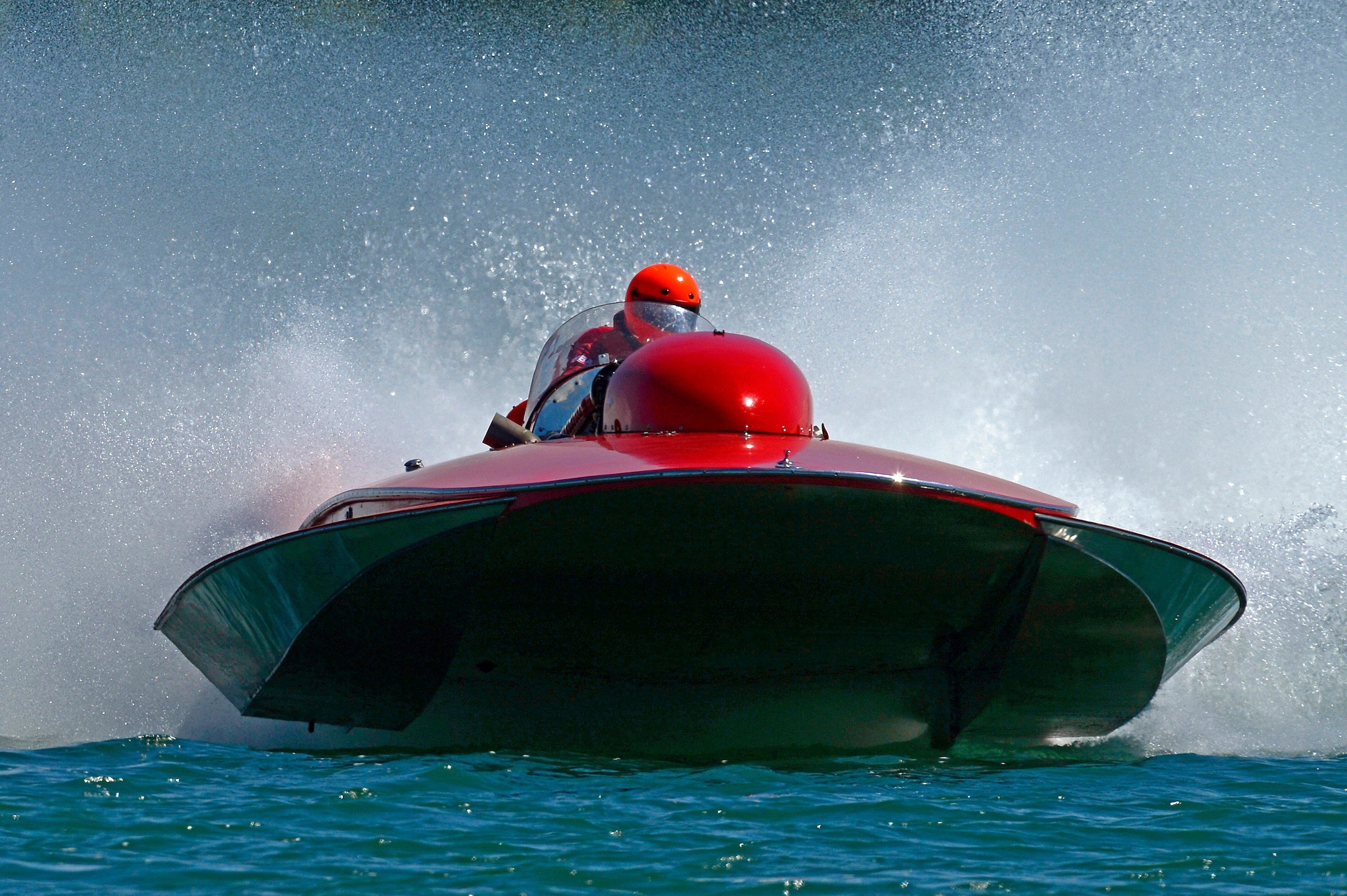
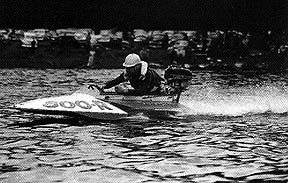
After the privation of the war years, the sport evolved with more powerful engines and changing hull design. Above, Mark Weber in the U-36 “Miss U. S.” 1956 Lauterbach Hydroplane. © F. Peirce Williams
By Fred Farley – Unlimited Hydroplane Historian
With the advent of World War II, gasoline rationing, and the military draft, competition for the Gold Cup (and most other major trophies) was suspended for the duration.
After nineteen years of Gold Cup Class rules, the “G” boats had seen their better days. There were no suitable engines being manufactured in the sizes prescribed by the then-current rules (600 to 732 cubic inches). Power plants, such as the 36-year-old Hispano-Suiza, were no longer available in quantity.
In the late 1930s, the most vibrant inboard group was the 225 Cubic Inch Class. Most of the top 225 Class hydros were Ventnor three-pointers and used Lycoming engines, which were both powerful and plentiful.
At the 1937 National Sweepstakes Regatta, the 225s and the Gold Cuppers raced against each other for the first time. And the winner was Jack “Pop” Cooper’s Ventnor 225 Class TOPS II.
In both 1938 and 1939, the Gold Cup Contest Board voted down a proposal to lower the Gold Cup cubic inch minimum to 225.
The quality of Gold Cup racing in the years just prior to the outbreak of World War II had been generally good. But the problem of what to do about the dwindling supply of engines wouldn’t go away.
But by 1941, the tribulations of the Gold Cup Class seemed inconsequential in light of the increasingly perilous international situation facing the country.
No President’s Cup was run in 1941. And the Gold Cup almost wasn’t. After Detroit declined to host the race, the Red Bank committee agreed to run the Gold Cup between heats of the National Sweepstakes.
Power boat racing then went on hiatus until after V-J Day in late 1945.
In summary, the Gold Cup Class, vintage 1922 to 1941, by all accounts, put on many more good races than bad. In terms of prestige, the Gold Cuppers were second only to Gar Wood’s Harmsworth hydroplanes of the 1920s and early 1930s. The Gold Cup Class was the APBA’s showcase category at least until the 225s came on in the late 1930s. Only on rare occasions did the “G” boats as a group ever embarrass themselves.
Throughout the Great Depression, the Gold Cup Class helped to keep big-time boat racing alive during a time of great economic uncertainty. Then, after World War II, the Gold Cup Class of the American Power Boat Association and the 725 Cubic Inch Class of the Mississippi Valley Power Boat Association combined and changed over to the APBA Unlimited Class.
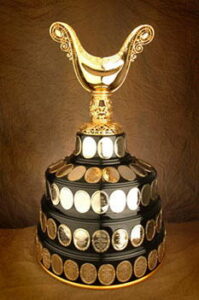
The APBA Gold Cup remains one of the premier motorsports trophies. APBA photo
Featured Articles