Racer Profile: Al LaPointe
January 27, 2026 - 11:39pm

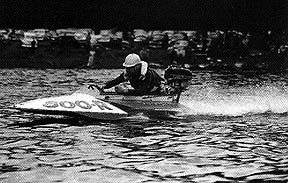
Al LaPointe in cockpit of Gold Dust
Racer Profile: Al LaPointe
By Craig Fjarlie
Al LaPointe was a long-time flatbottom racer and manufacturer of safety gear. He was born in New Bedford, Massachusetts in early February, 1937. The following profile is based on an interview with LaPointe that was conducted by Craig Fjarlie, with contributions by Patrick Gleason and LaPointe’s wife, Judy, at their home in Centralia, Washington.
“I went to school in a little town outside of Fall River, Massachusetts,” LaPointe remembers. “My grandfather managed a boat club, and in the summer, I had a little sailboat. We sailed all day long. I went in the Marine Corps in 1955. I got out in January of 1960. My oldest brother was racing a 48 Hydro on the west coast, a boat called Flying Alki. He wanted me to move out here to go to work with him, so that’s when I came out here.”
To clarify an item of potential confusion, LaPointe’s oldest brother’s first name was Alcide, but he also went by Al. The subject of this profile is Albert LaPointe.
LaPointe worked on Alcide’s boat and learned to enjoy racing. “He did pretty well, but he had a large family—too large to stay in boat racing.” When Alcide stopped racing, LaPointe worked on a boat owned by Stan Masels. “He bought my brother’s boat. It was brand new; it hadn’t run. I crewed on it. First race we ran was at Stan Sayres pits (on Lake Washington),” he recalls. “I did that for a few races, but I didn’t get along too well with him and I quit. I always loved boats, so I went out and bought a Pacific Mariner. I raced against Bob Best and Rick Adams. They always beat me and that’s when I said, “I have to do something different,” so I bought a Super Stock flatbottom. It was built by Rudy Ramos—a Rayson Craft. He was a big-time racer, especially in endurance boats.
“There was an outfit on First Avenue in Seattle, a pleasure boat dealer, and they also had the distributorship for Rayson Craft. I bought it from them,” LaPointe continues. “I had it written up for heavy-duty racing. I was eventually going to run a blown engine, which was K Racing Runabout. I went to California to pick up the boat. It was supposed to be this brand new design that was one year old, different bottom. I went in there and they showed me this boat and I said, ‘That isn’t my boat.’ They said, ‘No, we wanted to talk to you about that. We want you to stay with the old style boat.’ This white boat was sitting there, no trim on it, and they had glassed the deck, like you normally do, but they hadn’t finished it or anything. I said, ‘Are you sure that’s a better boat?’ They said, ‘Yeah, we had a couple of guys who were real successful (with it). We’re going back to that boat.’ So, they gave it to me at a reduced price. I brought it home and we put one of Steve Jones’ Ford engines in it. Jim Hooker, who worked for Steve, was the brains behind all of the designs in his boats. He was really good.” LaPointe was immediately successful with the new boat, which he named Satan’s Fury. “The first five races we were in, we won them all. This boat was extremely fast. I used to drag race it and circle race it. I was trying to be the first Super Stock to run 100 miles an hour in the quarter. We were setting up to break the record on Green Lake. The week before that, we raced on Lake Sammamish.The whole bottom under my feet blew out. I was right at the traps, finishing, and they clocked it at 99.9 miles an hour. The only reason I know what happened is somebody filmed the whole thing. I can’t remember any of it. The boat submarined and when it did, the water came rushing over it and it took me and ripped me right out of the seat, over the back of the engine. The boat completely disintegrated. I woke up in the hospital. They had to revive me twice. Lost a lot of blood, busted my leg, my hip, my pelvis. When I got out of the hospital—I had a gas station and also repaired engines and did front end work—that had all been run into the ground because I was lying in the hospital. All I had left was my wife and my house.”

Satan’s Fury, Al LaPointe driving, about to flip
Before long, LaPointe recovered from his accident and needed an income source. “A good friend of mine worked at Kenworth,” LaPointe explains. “He said, ‘I’m going to teach you how to do fiberglass. In the evenings, I go out and bid jobs for these trucking outfits, fixing their trucks.’ He was supervising the fiberglass department at Kenworth. I learned that business and the next thing I knew I had my own place called LaPointe Plastics. I had quite a few people working.”
All the while, LaPointe continued to attend boat races and developed friendships. “I got to know Steve Jones quite a bit. He had a mold for a smaller Starfire – a pleasure boat – but he never used it. I was looking at those things and I thought, the bottom is the same as his race boat. He put a little Ford 289 in it. Had a short deck, it was kind of an ugly boat and was real tall. Jim Hooker was working for him, and he wasn’t getting along, so I asked him, ‘If I cut that boat down and put a new deck on it, isn’t it the identical bottom as the bigger boat?’ He said, ‘Yeah, just short.’ So I hired him and he started building me Javelin boats. That’s where everything started to fall into shape for me.”
LaPointe had 12 Javelin boats built. He kept one for himself and sold the others to various customers. He also became a distributor for Hondo boats. “They were primarily drag boats.” LaPointe watched a race at Lake Sammamish and noticed a youthful driver named George Woods running the quarter mile. “The boat was working really well for him, and it wasn’t too well known for being able to do that. I thought, ‘Man, I’ll have to get him in one of my boats.’ I bought him a Hondo boat and it was called Underdog. He raced it for a couple of years in the SK class. Then we came up with a new design on the Hondo, and we bought another one and put him in that. The second boat was a Super Stock. He did so well in that, Hondo approached me to ask if I wanted to try to run a record. They said, ‘If you buy a new boat and set a record, we’ll give you a free boat.’ So, we bought the CanAm Express.

CanAm Express K Runabout

George Woods in CanAm Express
George and I each did some work on the bottom and put our ideas together to make the boat go better in the circles. We were running K. I asked a friend in Canada, ‘Why don’t you buy these beautiful blown engines that we can purchase for the right price, because they want to see us make that boat work.’ So, he bought the engine and that’s how we got the name CanAm Express. George kind of maintained the boat but sometimes it was at my shop, depending what we had to do on it.” The first time CanAm Express ran, it clearly needed work. “The first race we were in, it was terrible. Everybody was saying, ‘Well, what are you going to do now?’ We said, ‘We’re just going to take it home and play with it and bring it to the next race.’ We knew right away the prop situation wasn’t right, so we got a new prop built for it and we started settling the boat down. It was a little tough to drive; only a guy like George Woods could drive it. He just set the world on fire with that boat—it was really fast.”
While CanAm Express was running, LaPointe continued building Javelin boats for the E Racing Runabout class. “I built two Javelins at the same time,” LaPointe says. “One was called Charging Charlie, which was mine, and the other was called Watachee. That was the first boat we built; we sold it to a kid by the name of David Baugh. Jim Hooker built it, mostly. My brother Ray, who worked for me, worked with Jim on the fiberglassing. Jim was a very, very good designer and also a helluva driver. He took the boat out and tuned it up and then we sold it to David Baugh. We made him ride in the passenger seat for four races while Jim drove it. He would point out rollers or pleasure boats on the other side of the lake and things like that, and explain how to run. Then we turned David loose and he just started winning race after race. We got Charging Charlie put together and ready, and Jim drove for a couple of years. Then I got back in the seat and drove it for quite a while.”

Charging Charlie, Kip Brown driving
Some well-known drivers had an opportunity to drive for LaPointe. “We built a front engine Javelin—probably the fifth or sixth boat that I built. It was legal in the E Racing Runabout class. There was only one other front engine boat. It was called Stardust. That’s where I got the idea. Jim Hooker said, ‘We can make one work.’ We went ahead and built this boat.” The boat was named Gold Dust. “I drove it and Jim drove it, and then I approached Chip Hanauer to see if he would drive it in a race or two and run Green Lake and try to get the record. He tested with us and then he drove it at Green Lake. He decided he didn’t want to run that type of boat. He wanted to stay with the hydros. We just ran the one heat and that was fine. That was smart on his part. He just didn’t feel comfortable in the boat. We sold it to other people, then Nate Brown ended up buying it. He wanted to restore it and run it in the Vintage class. Right now it’s hanging in the rafters in his shop. I don’t think it’ll ever run again.”
Another top driver who handled Charging Charlie was Kip Brown. LaPointe explains how the relationship transpired. “It was at Pateros,” he begins. “He was in the stall next to us in the parking lot. This hydroplane – I think it was a 145 – was sitting next to us. It belonged to Jack Sipila. For some reason, Kip had come to that race to work on it. I was pretty impressed by the way he was working. I asked who he was and they said it was Kip Brown. I asked him if he’d like to try our boat out. He didn’t believe I was serious and I said, ‘Yeah, I’m serious. I’ll put you in a driving suit and life jacket. Go out and try it and see if you like it. If you don’t, fine.’ So, he just took to that boat, bang! Right off the bat. He was a natural. So that started a friendship that still goes to this day. I have a lot of respect for him—very intelligent driver.” (Note: Brown believes his first chance to drive Charging Charlie took place at Lake Chelan, but LaPointe insists it was at Pateros.)
Brown drove for LaPointe for about five years. He handled a different boat that was built and owned by Ron Jones, Jr. “He built it and then I re-did some of the work on the bottom and changed it. I wanted to build a boat that was safer. He built it of carbon fiber. He said he could build a lighter, stronger boat and it would have a capsule on it. I would not build another boat where the guy’s in an open cockpit—it was either capsule or no deal. He (Jones) built the boat and called it 1 Up. I did all the hardware on it and set it up. I supplied the engine. We took the 327 engine out of Charging Charlie and put it in that boat, but ran it as a Super Stock for testing purposes. When we put the boat in the water, it was wild. Kip said, ‘Boy, we’ve got a lot of work to do.’ We started working on it, got it settled down and we finally got it to where it really hauled. The boat was real light and the way the bottom was built, to catch the air, we were beating most of the Super Stocks with that small block Chevrolet.”

Kip Brown and Al LaPointe with 1 Up

1 Up, Kip Brown driving
At the conclusion of that season, there was a plan to run a big block engine in 1 Up the following season. “Kip took it, and he and Kim Austin built a big block for me,” LaPointe says. “We figured if we just moved the strut an inch and ran the prop in a different position, we could make this thing really work. Well, we never got to find out. They had the boat and put the engine in it. They didn’t move the strut. They put the engine farther back. I met them at Lake Lawrence. It was the first I’d seen the boat. I walked over and looked at it and I said, ‘Why didn’t you guys do what I told you?’ They said, ‘We didn’t think it was right and we wanted to try something else.’ Put the boat in the water and when he got after it, it was like an elevator. That thing was just as wild as could be. He couldn’t drive it. I put it on the trailer and said, ‘That’s it. We have to go back the way it was.’ The engine had a big oil leak. We took the engine out and the boat went back to Jones’ shop. Then he sold it to a guy who ran a K boat. That was kind of the end of that deal.” LaPointe ended his time as an owner and driver in the 1990s.

Gold Dust, Al LaPointe driving
One other LaPointe family member was involved in racing. Alcide LaPointe’s daughter, Laurie, began racing in the 145 inboard class. “She bought her first boat s from somebody, but it was just a boat,” Al LaPointe explains. “She drove it for a year and then she knew she needed a better boat. I wasn’t aware she was running with her boyfriend and my brother. They were taking care of the boat; I didn’t have anything to do with it.” Laurie learned that Sandi Wray was selling her Belleville hull, Country Girl. Laurie bought it. “I started talking to her about how dangerous that boat could be, but with all the right stuff they had put on it, they (the Wray family) finally got it working really well. Laurie had only run the boat one time. The water was rough and the boat got loose. Okay, we’d go to Dexter Dam. The water would be nice and we could start playing with this thing. We drove there in the motorhome and Sandi Wray’s dad showed up there. All of his buddies from California were racing. He came over to our motorhome and wanted us to put a propeller that he had with him on the boat, and an air intake on the carburetor. What we didn’t know was that the prop he had was one that they’d finally started using to solve their problems. It was built by George Lockhart. It struck me funny that he did that, but he said, ‘Try this prop, I know it’s better than the prop you have on the boat.’ We put it on the boat and on Saturday, she ran bow-to-bow, it was a helluva race. She was in lane two and the other Belleville was a Budweiser-sponsored boat from California. They ran deck-to-deck for three laps. It was something to see. At the end of the day, he came back over and took the prop off the boat. I said, ‘We’d like to buy that propeller from you.’ He said, ‘It ain’t for sale.’ I said, ‘Well, can we use it tomorrow?’ He said, ‘No, you can put your own prop back on it and see how you can do with that.’ I thought about this all night and I decided we weren’t running the boat. I was going to go to Lockhart and have him make another propeller, because I knew he would have all the records of what he does. The next day I told her we weren’t running the boat. I went down and sat in the grass with my wife and a couple of friends. Eventually, my son, Gary, came down and said she was just begging to run go out and practice her start and she wouldn’t get on it. Finally, I gave in and said okay. Well, she went out and put her foot right to the floor and it blew over and killed her. Those Bellevilles were really wide and they caught a lot of air and it just blew the thing over. Gary was extremely upset and it took a lot out of me and my wife. It started a rift in the family over the boat. We finally got the boat back. We were going to straighten it out and put the right propeller on it and run it in her memory. Then we sold the boat and didn’t have anything more to do with it.”

Laurie LaPointe in Team Tradition (the former Country Girl)
In 1978, LaPointe started Security Race Products (SRP). “I was seeing how the equipment that was available at the time was working. I wasn’t satisfied with it, and I had my own ideas on safety equipment,” he explains. “I went to Annette Kelson and talked to her about ideas I had on building a life jacket, and could she build me a prototype. We sat down and figured it all out. What we wanted to do was pretty much the same as Lifeline except the flotation was a lot different. So we built this jacket, and that’s how Security Race Products started. We were just building life jackets, and then more and more people wanted us to build other stuff, so we started building cut suits for the outboarders.
“Bill Muncey built some jackets for a while. The Lifeline jacket in years past was similar to the Muncey jacket.” Muncey’s jackets used kapok material in sealed plastic pouches. If the kapok happened to get wet, it became heavy. LaPointe switched from kapok to Ensolite. He also changed the leg bands. “They sat by your knees, loose, and then came up around you. I went to the APBA national convention and showed them how dangerous that was. There were guys breaking their necks. When they hit the water, the water would grab the jacket and pull it up over their heads. But they couldn’t move. These fancy deals (straps) weren’t doing anything. We redesigned the straps as a wraparound, like on the parachute jackets.” SRP jackets included leg bands that wrapped around the driver’s thigh. “When you put those on and pulled them tight, you couldn’t stand up straight. We advertised better flotation and a lot slimmer jacket. That’s what really made it go. Then, of course, the experience with people crashing their boats and coming away a lot better off.” SRP also added impact material to its jackets.

Steve Reynolds in first Security Race Products life jacket
When drivers were being strapped into boats, it created a new challenge for SRP. “The way I first built capsule suits was with a bladder inside. When you got thrown out of a boat, it would activate and blow up. I came up with that. I went to the national convention. We built this capsule suit and everybody was concerned, is it going to pass APBA? I took it to the convention, went out to the pool, and put Chip Hanauer in the jacket. I said, ‘I want you to watch very carefully now. He’s going to force himself to the bottom, and that means the boat is upside down. He can swim out from under the cockpit and get out. The second thing is, once he’s clear of the boat, he’s going to come rocketing up out of the water and then he’s going to sit there and float. If he’s injured, he’s still going to be all right.’ So, we got Chip in his capsule suit, he jumped in the pool, got himself down to the bottom, and then here he comes up to the top. He just shot out of the water, then settled down and that was it. That’s all they needed to see. Jim Kropfeld and Chip were the first two to use it.”
Before long, drivers in capsule boats needed to use air helmets. Parts had to be ordered from several sources. There were SCUBA parts, a mask and hose that were military spec. The military was reluctant to sell them to SRP. “Security reasons,” LaPointe confirms. The helmet was sealed so that inside the helmet the driver was completely dry. The helmet had an ambient air valve. The valve had a little sponge with a plastic back. When the driver was in the boat with the mask on, the ambient air valve was in the open position. The driver could breathe the air in the cockpit. If the boat flipped or the driver went in the water, the little foam sponge would expand, it would shut off the ambient air, and the driver would breathe the air in the tank. “It reacted real quick,” LaPointe says. “It wasn’t like, ‘I have to wait and see if it works.’ Bang!” The first air helmets were built by a company named Tesh, but later they were made by Pyrotect.
SRP also was tasked with making the Kevlar explosion blankets that wrap around the hot section of the turbine engines used by Unlimited hydroplanes. It was a new project for LaPointe. “There was a lot of, ‘Where do you start? What’s it going to take?’ Jim Lucero, Jerry Verhuel, and I developed the explosion blankets for the Unlimiteds. We were working on the theory that if it was a continuous wrap around an aluminum or steel bell housing, when it exploded, they would tighten instead of loosening. By wrapping around like that they were much stronger. We did a little backyard engineering and decided how many layers we were going to build it. We ended up at 39, which was more than we needed. Thirty layers was the safety; the other nine were extra, just to help. So, we started building those blankets.”
At one time, Security Race Products employed 21 people. There were five people who did sewing, and others who worked with impact material and cutting out foam. LaPointe is especially grateful to Lang Nguyen, a Vietnamese woman who worked at SRP for 32 years. “She was the best I’ve ever had,” he says. Age, however, began to catch up with LaPointe. “In 1994 I had open heart surgery. I had a quadruple bypass,” he remembers. “After that, I couldn’t travel anymore; a lot of things I couldn’t do. It slowly leveled out.” He had to retire from the company and turned it over to his sons and daughter. “Gary is the only one running it now. He has a shop in Oregon, a big embroidery company there. He knows the company inside and out. He’s down to one person doing the sewing. The trouble is, when you’re like that, if that person quits, you’re out. He’s got it going, but he hasn’t made up his mind if he wants to expand it or leave Security Race Products the way it started, just with the hydroplanes and outboards, and keep it going that way as long as we can.”
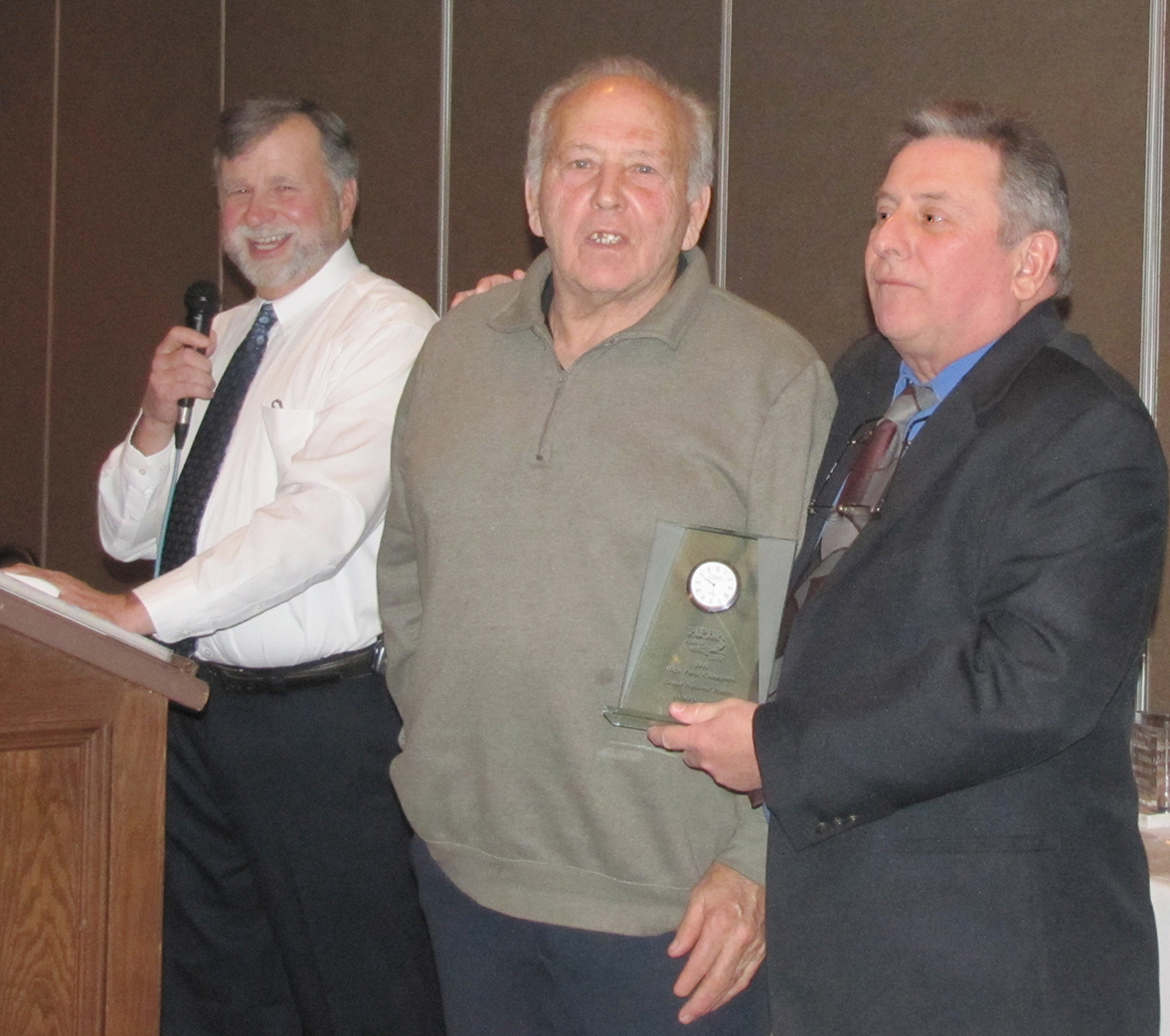
LaPointe received a special honor in 2018, when he was inducted into the APBA Honor Squadron. “I never dreamed, that was not my plan for what I did,” he admits. “Patrick Gleason decided I should be there and worked on it for quite a while. Then he sprung it on me. I was quite honored when I found out Ann Fitzgerald was sponsoring it, too. I have tremendous respect for her. Unfortunately, I was pretty sick at the time I found out, and couldn’t make it to the ceremony in Florida. I sent my wife and oldest son, Gary. That was quite an honor. You spend all your life racing and trying to come up with safety equipment to save lives, and it just shows the appreciation.
Al LaPointe has made a tremendous contribution to boat racing, and he is justified in being proud of his accomplishments. He is still a great storyteller, and it would take a book to document them all.
Featured Articles